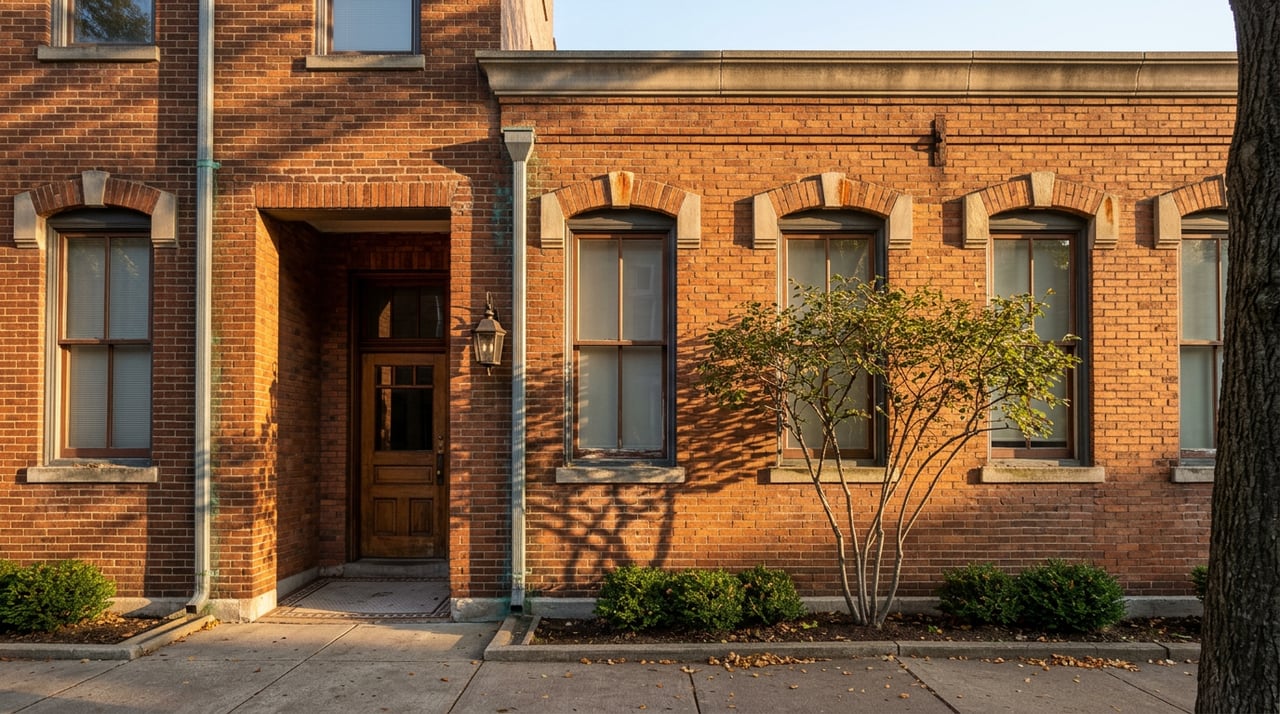
A Capitol Hill seller lists a one-bedroom in a 1920s brick building near the Pike/Pine corridor. The offer comes in fast, the buyer's lender starts underwriting, and then the title company asks for something the seller has never had to produce before: a current reserve study, or a clear explanation of why one doesn't exist. The building has stood for a hundred years without one. Nobody on the board thought that was a problem until this year.
That scenario is not hypothetical anxiety. It is the direct result of a Washington law that quietly rewired disclosure rules for exactly the kind of building Capitol Hill has more of than almost anywhere else in Seattle.
Why This Is Suddenly Capitol Hill's Problem
Capitol Hill's condo stock skews old. The neighborhood holds a mix of 1900s brick walk-ups, 1920s co-ops, and mid-century towers, alongside a genuinely unusual concentration of stock cooperatives, a housing structure more common in New York than anywhere else in Seattle. Buildings like the historic co-ops near Millionaires' Row and the brick walk-ups along Broadway have been operating under decades-old governance documents that predate any state mandate to plan financially for a new roof or a failing elevator.
Until this year, that history didn't matter much for a sale. Washington's reserve study requirements applied in full force to communities formed under the newer Uniform Common Interest Ownership Act, known as WUCIOA, while older associations formed under the original Condominium Act could often point to their age as a reason the newer rules simply didn't reach them.
That gap closed on January 1, 2026.
The Timeline That Snuck Up on Everyone
The change came from ESSB 5129, signed into law on April 22, 2025, and it moved in stages rather than all at once, which is part of why it caught boards off guard.
| Date | What happened |
|---|---|
| April 22, 2025 | ESSB 5129 signed into law (Chapter 119, Laws of 2025) |
| July 27, 2025 | General chapter effective date |
| January 1, 2026 | Cross-applicability provisions take effect, extending WUCIOA's reserve study rule to associations formed before July 2018 |
| January 1, 2028 | Full consolidation under WUCIOA; the older Condominium Act and Horizontal Property Regimes Act are repealed |
The January 1, 2026 date is the one that matters for a Capitol Hill listing right now. It pulled pre-2018 condo and HOA communities into the same reserve study statute, RCW 64.90.545, that newer buildings have followed for years. The overwhelming majority of Capitol Hill's condo buildings were formed years before 2018, given how much of the neighborhood's stock dates to the early and mid-twentieth century. The neighborhood's age, which has always been part of its appeal, is now also the exact profile this rule was written to catch.
What Actually Shows Up in Escrow
The mechanism that makes this real for sellers isn't a fine or an inspection. It's the resale certificate.
Every unit sale in Washington now surfaces the association's reserve study compliance status. A buyer, their agent, a title company, or a lender can see whether the association maintains a current study, and associations without one are flagged.
Under RCW 64.90.640, the resale certificate a seller's association provides at closing must disclose whether a reserve study exists under RCW 64.90.545, along with a summary of that study if one is available. There's no penalty provision buried in the statute for skipping the study itself. The consequence is more direct: the absence shows up in writing, in a document the buyer's lender is reading, at the exact moment a deal is supposed to be moving toward closing rather than stalling on it.
The state did cap what associations can charge for producing this paperwork, at $275 for an initial resale certificate and $100 for updates, which keeps the cost from becoming its own obstacle. But a fee cap doesn't help a board that has never assembled the document before and now needs to produce one under a live purchase contract's timeline.
Small associations get one narrow exception. Condominiums with ten or fewer units can waive the reserve study requirement, but only with a two-thirds vote of owners, and that waiver has to be renewed every three years. Even then, the fact that no study exists still has to appear on the resale certificate. There is no version of this where a buyer simply doesn't find out.
Why the Timing Makes This Worse Right Now
A missing or outdated reserve study would have mattered less in a market where condos were moving as fast as everything else. That isn't the market Capitol Hill is in as of mid-2026.
Single-family homes in the neighborhood are running around 2.1 months of supply, genuinely tight and favoring sellers. The condo segment has loosened to roughly 4.4 months of supply, a real split in leverage depending on which side of that line a listing falls on. A buyer shopping a single-family home with three competing offers has less patience to dig through HOA paperwork. A buyer shopping a condo with several similar units to choose from has both the incentive and the time to ask why one building can produce a current reserve study and its neighbor down the block cannot.
That gap in supply doesn't just soften pricing. It hands buyers room to treat a compliance question as a reason to walk, or as leverage to negotiate a price adjustment for a building that hasn't planned for its own maintenance. A seller who assumes the building's vintage charm carries the listing on its own is not accounting for what a lender's underwriter is going to flag before that deal ever reaches the closing table.
The Co-op Wrinkle Nobody's Talking About
Capitol Hill's reserve study conversation gets more complicated because so much of the neighborhood's older stock isn't condominium ownership at all. Buildings like the historic co-ops near Millionaires' Row involve buying shares in a corporation that owns the building, not a deeded unit governed by the Condominium Act. The reserve study statute is written around condominiums, HOAs, and planned communities under WUCIOA. Whether a traditional stock cooperative falls inside or outside that framework is a real question, not a settled one, and it's worth raising directly with the association's attorney rather than assuming either answer. A seller in a co-op shouldn't assume the new rule automatically applies, and shouldn't assume it doesn't.
A Pre-Listing Checklist for Vintage Building Sellers
Before a Capitol Hill condo or co-op goes on the market, a few questions are worth answering while there's still time to fix a gap instead of explaining one mid-escrow.
- Ask the board directly whether the association has a current reserve study, and when it was last updated.
- If a study exists, ask what percentage of full funding it shows. Industry guidance generally treats anything under 70% funded as a sign a special assessment is likely at some point, and under 30% as a serious red flag.
- Confirm whether the building was formed before July 2018, which is the dividing line for whether the new cross-applicability rule reaches it.
- If the building is a stock cooperative rather than a condominium, ask the association's attorney whether the reserve study statute applies at all.
- Request a copy of the most recent resale certificate template the association has used, so there are no surprises about turnaround time once a contract is signed.
Frequently Asked Questions
Does this apply to buildings with only a handful of units? Condominiums with ten or fewer units can vote to waive the reserve study requirement, but that vote has to be renewed every three years by a two-thirds majority, and the waiver itself must still be disclosed on the resale certificate.
What if my building has never had a reserve study and the board hasn't started one? There's no separate penalty for the gap itself. The exposure comes through the resale certificate, which now has to state plainly whether a study exists, visible to the buyer, their lender, and the title company handling the transaction.
Is a reserve study the same thing as a healthy HOA budget? No. A reserve study is a long-range plan covering major components like roofs, siding, and elevators over a projected period. A building can have a balanced annual operating budget and still carry an underfunded reserve for the bigger repairs down the road.
Capitol Hill's older buildings have always sold on character: leaded glass, original millwork, brick that has held up for a hundred years. That character now comes with a paperwork trail buyers are entitled to see before they remove financing contingencies. Getting ahead of it, rather than discovering it mid-transaction, is the difference between a smooth close and a renegotiation nobody wanted.
If you're weighing a sale in one of Capitol Hill's vintage condo or co-op buildings, Kyle Mumma can help you get the reserve study conversation started before a buyer's lender does it for you. Let's Connect.