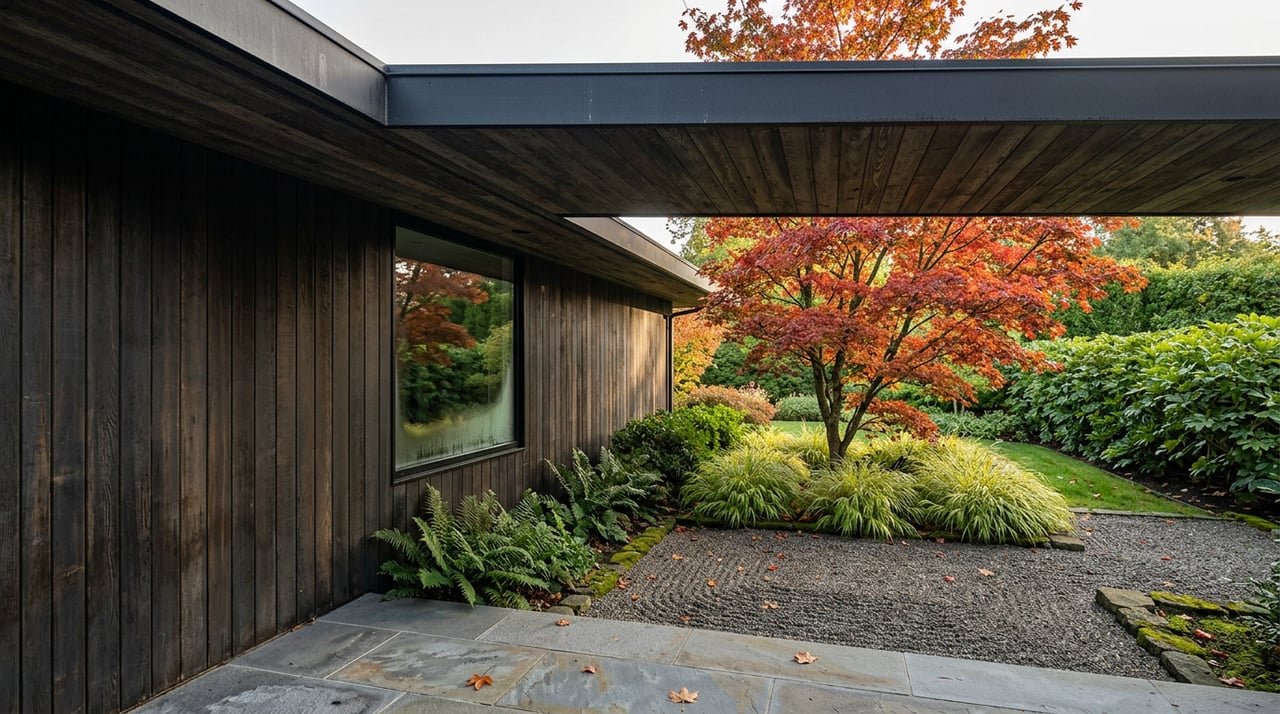
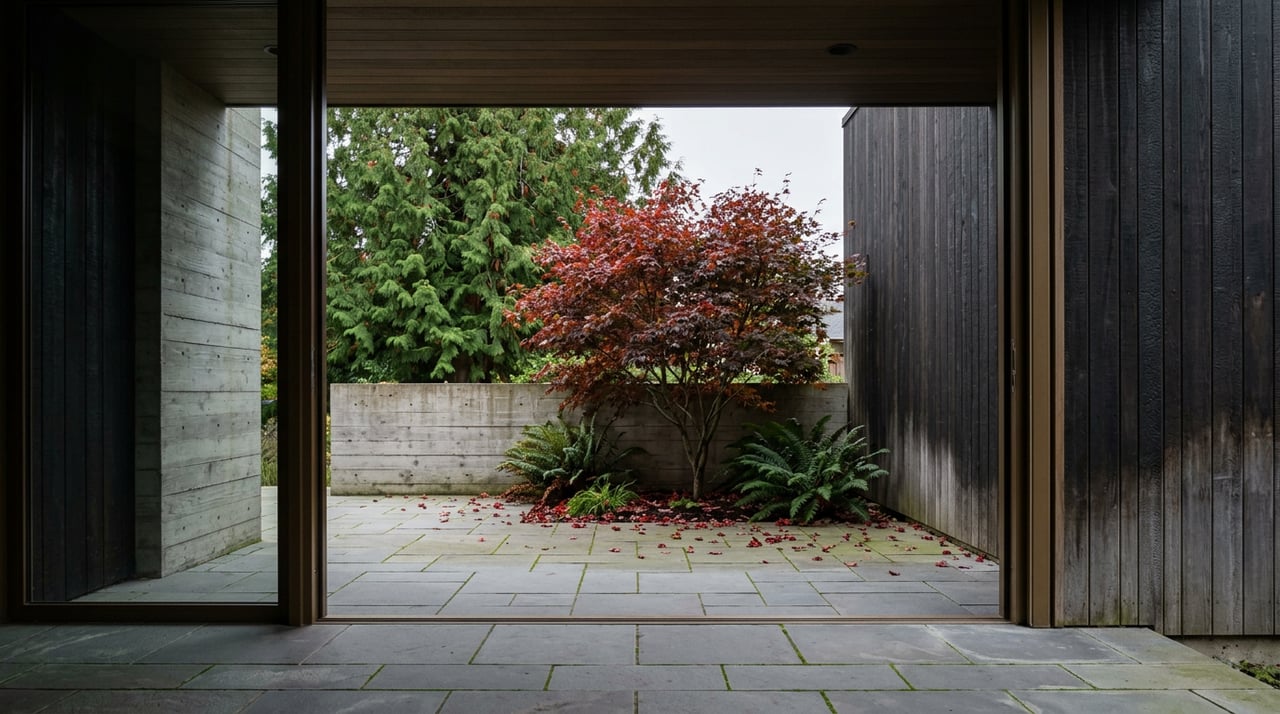
Walk Azalea Way on a clear September afternoon and it feels unchanged from any other fall in Washington Park. The maples are just starting to turn. The Graham Visitors Center is open its usual Wednesday through Sunday hours, gift shop humming until quarter to four. The gate to the Seattle Japanese Garden still asks for its small entrance fee at the south end of the grounds. If you've lived here a few years, you could walk this loop with your eyes closed.
That familiarity is the thing worth questioning right now. Underneath this fall's ordinary walk, three separate projects inside the Washington Park Arboretum have moved from planning documents into permits, grant awards, and construction contracts over the past several months. One is already visible if you've been paying attention. One is about to become visible. One is still entirely invisible, buried in design drawings that won't show up on the ground for another year. None of them will make this year's walk look different. Next year's is another question.
The Walk That Hasn't Changed
Start with what's still exactly as it was. The Arboretum's free "1st Thursdays" public tours run through fall foliage season, and this year's remaining dates are Thursday, October 1 and Thursday, November 5. They're led by Arboretum volunteers, they're free, and they start from the Graham Visitors Center, the same building that's staffed the front desk and gift shop here for years.
If you're walking with someone visiting from out of town, or just want a longer loop, the neighborhood's usual anchors are all still in place. The Seattle Tennis Club sits where it always has. A short walk brings you into Madison Park, where Madison Park Bakery and Cactus remain the easy answer to "where should we eat after," and How to Cook a Wolf, chef Ethan Stowell's Madison Valley spot, is close enough to fold into the same afternoon.
None of this is news. It's the baseline. It's also the reason this fall is worth noticing at all, because the baseline is about to get more crowded with construction fencing than it's been in years.
The One You Can Already See
If you've walked the Arboretum's eastern edge this summer, you've likely already run into orange fencing near Foster Island. Seattle Parks and Recreation began Phase 1 construction on the Arboretum's Waterfront Trail there in June 2026, rebuilding the floating walkway's support piles, floats, and railings. A portion of that trail is closed while the work continues, and the city doesn't expect to reopen it until early 2027.
That closure has gotten its own attention locally, and rightly so. What matters for this piece is what it represents: the first of three Arboretum projects funded in roughly the same stretch of time to actually break ground. It's the one you can see right now. The other two are still ahead of it on the timeline, which means this fall is the last one where you can walk past their future footprints without any evidence they're coming.
The One About to Break Ground
Walk south along Azalea Way toward the Birch parking lot at 1438 E Lake Washington Boulevard, and you're standing in the middle of the next project's construction zone, except there's nothing there yet to tell you that. In March 2026, Seattle Parks held an open house at that exact spot to share design plans for the Pacific Pathway, a new accessible trail that will connect Azalea Way, the Arboretum Loop Trail, and the parking area to the Pacific Connections Garden and the historic Lookout Gazebo.
The pathway is the first phase of a larger China Forest planting inside the Pacific Connections Garden, built around plants native to Mount Emei, a UNESCO World Heritage Site in China. Seattle Parks describes it as designed to weave through existing plant collections and new plantings that highlight the region's biodiversity. The project has real money behind it now: $873,000 in grant funding through the Washington State Department of Commerce's Local Community Grants Program covers construction costs, with the rest relying on donor support raised through the Arboretum Foundation. Planning and conceptual design wrapped up in 2025. Construction is slated for January through August 2027.
As Capitol Hill Seattle News reported after the March open house, the arrangement here follows the Arboretum's usual division of labor: "The city owns the land and maintains the roads, trails, lawns, and utilities," while the University of Washington curates the plant collections. It's a small detail, but it explains why a project like this can move through funding and permitting on the city side while the plant science happens on a completely separate track through the university.
For a resident, the practical read is straightforward. This fall, you can still walk the full stretch from Azalea Way to the Lookout Gazebo without a single sign of construction. Next fall, you likely won't be able to say the same, because ground should be breaking sometime between January and August 2027, right in the corridor most people already use to reach the Pacific Connections Garden.
The One Still Underground
The third project is the hardest to see because there's nothing to see yet, not even fencing. Since 2018, a volunteer group called Friends of Arboretum Creek has been working with Seattle Parks on a plan to reconnect two natural springs, Alder and Alley, to Arboretum Creek. The springs were cut off from the creek's watershed when Lake Washington Boulevard was built around 1905, and the creek has lacked reliable summer flow ever since, which hurts water quality and the aquatic and bird life the Arboretum depends on.
The engineering firm Jacobs has finished 60 percent construction drawings and is working toward 90 percent design and permitting approval. Beyond the ecological case, the project has a resident-facing benefit that's easy to overlook: it's designed to capture and treat stormwater that currently causes localized flooding both in nearby residential streets and near the Japanese Garden entrance along Lake Washington Boulevard. If you've noticed water pooling on that stretch during a heavy fall rain, this is the project meant to fix it, though it's not expected to be under construction until 2027 at the earliest, and only if funding and permitting line up.
It's one more piece of the same pattern. A separate Arboretum Master Plan project, the Woodland Meadow, is also moving through design right now, reimagining the current Crabapple Meadow near the site of the Arboretum's former field nursery. None of these are emergencies. All of them are real, funded to varying degrees, and converging on the same roughly 230 acres that the University of Washington Botanic Gardens and the City of Seattle jointly manage.
What This Fall Actually Is
None of this changes anything about the walk you'll take this October or November. The tours still run on the first Thursday of the month. The visitors center still keeps its usual hours. The Japanese Garden gate still charges its usual entrance fee. But it's worth understanding that this year's version of the walk is likely the last one that looks exactly like the last several years, before a new accessible pathway starts construction next year, before a creek restoration project potentially breaks ground the year after, and before whatever comes of the Woodland Meadow's current design phase takes shape on the ground.
If you live in Washington Park, none of this requires you to do anything. It's simply useful to know, the way it's useful to know which street is getting repaved before it happens rather than after. The neighborhood's rhythms, the walk, the Thursday tours, the stop at Madison Park Bakery on the way home, aren't going anywhere. What's underneath them is just further along than most people walking past it this fall would guess.
If you're weighing a move to Washington Park, or thinking about what a property near the Arboretum is really worth once you factor in what's changing around it and not just what's listed on the flyer, that's exactly the kind of context Mumma Homes builds into every conversation. Let's Connect.